Beyond the Rectangle
After 20 years in film and TV, I thought I’d seen it all. Then I stepped into a dome and realiased that I was looking at the future of storytelling.

After nearly two decades working in television and film, mostly in sound and post production, I thought I had a fairly decent grasp on the industry. You learn the rhythms. The politics. The panic. The specific tone a producer uses when they say “small tweak” and accidentally destroy six weeks of work.
Then about eighteen months ago I stumbled into something that really excited me.
Fulldome.
Or immersive production. Or XR. Or whatever term survives this week’s branding exercise. Personally I prefer immersive because at least it sounds like what it actually is rather than a rejected energy drink.
It’s completely rewired how I think about filmmaking.
Not in a “this changed my life” TED Talk sort of way. I’m still fundamentally a tired bloke staring at a screen for unreasonable amounts of time. But creatively, it felt like discovering a hidden backroom in a building I’d worked in for twenty years.
The first project we made for the dome was a film about the history of the town Devonport, where the dome itself is based. It was shown at a festival, got repeat screenings and the locals thankfully people seemed to genuinely connect with it.
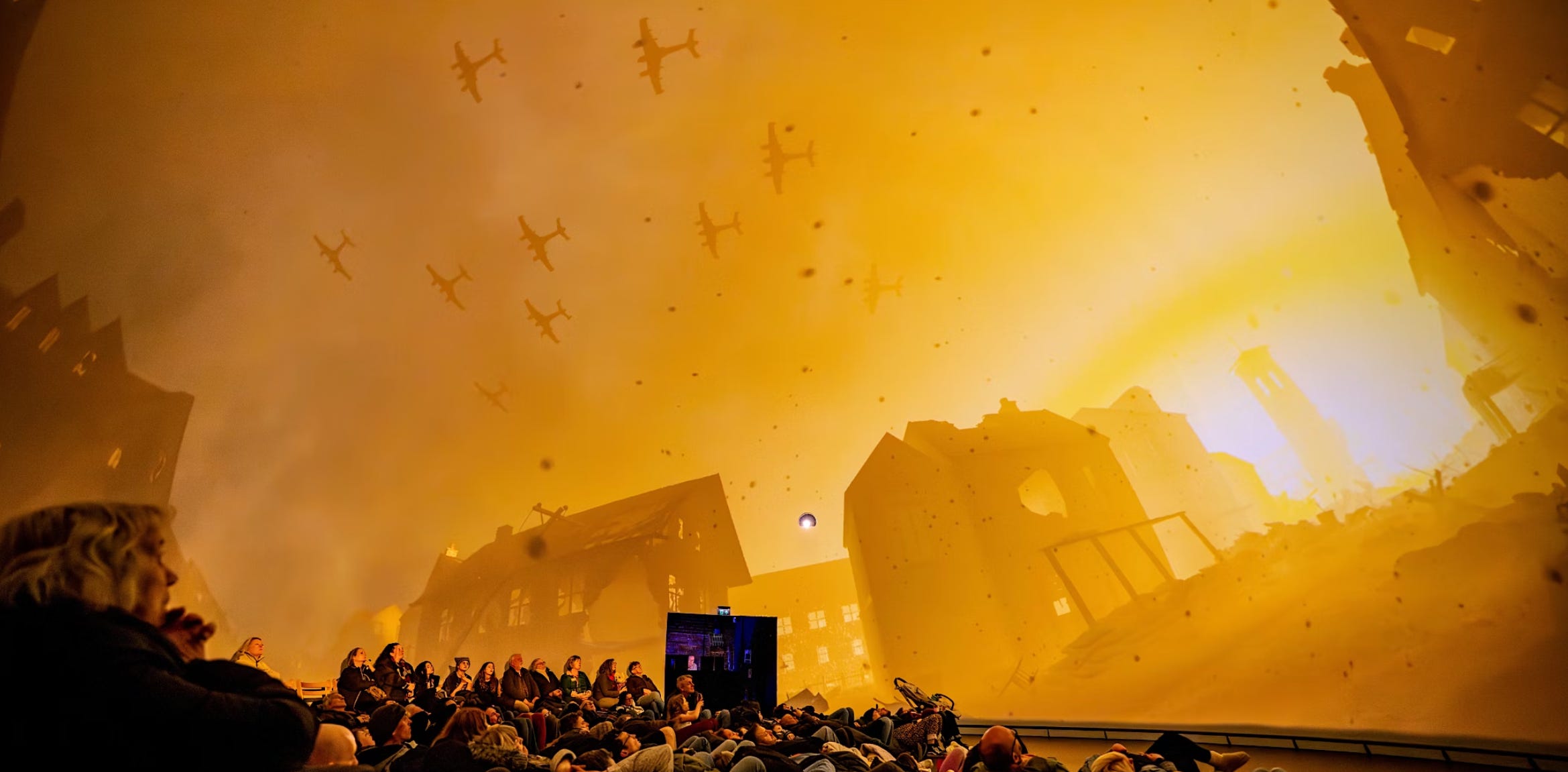
After that we moved into animation. Then a video game project. Then another immersive film exploring the county of Cornwall’s minerals, natural resources and their impact through history and into the future.
That project ended up being entered into Dome Fest West in Colorado, which felt surreal enough already considering I spent a decent portion of my career mainly in dark rooms in the arse end of nowhere.
We decided to attend Domefest, and what struck me most about the fulldome world wasn’t even the technology.
It was the people.
The immersive community is probably the most welcoming creative community I’ve encountered in the creative industries. Which genuinely caught me off guard because film and television can sometimes feel quite cut throat and protective. Not everyone of course, but I think most who work in that industry would have encountered this at some point.
What’s funny is fulldome itself isn’t even remotely new.
It comes directly from planetarium culture. I went to planetariums as a kid. I also used to visit this brilliant dome as a kid which was called Cinema 180 where they projected roller coaster films onto a giant dome screen.
I remember being absolutely mesmerised while simultaneously feeling catastrophically motion sick.
But that sense of awe stayed with me. I just never connected it to filmmaking as a career path because traditional broadcast and cinema always felt like the default route. Rectangles everywhere. TVs. Cinema screens. Phones. Endless rectangles dictating how stories are framed.
Then suddenly you walk into a dome and realise you’re not framing the audience’s attention anymore.
You’re surrounding it.
And that changes everything.
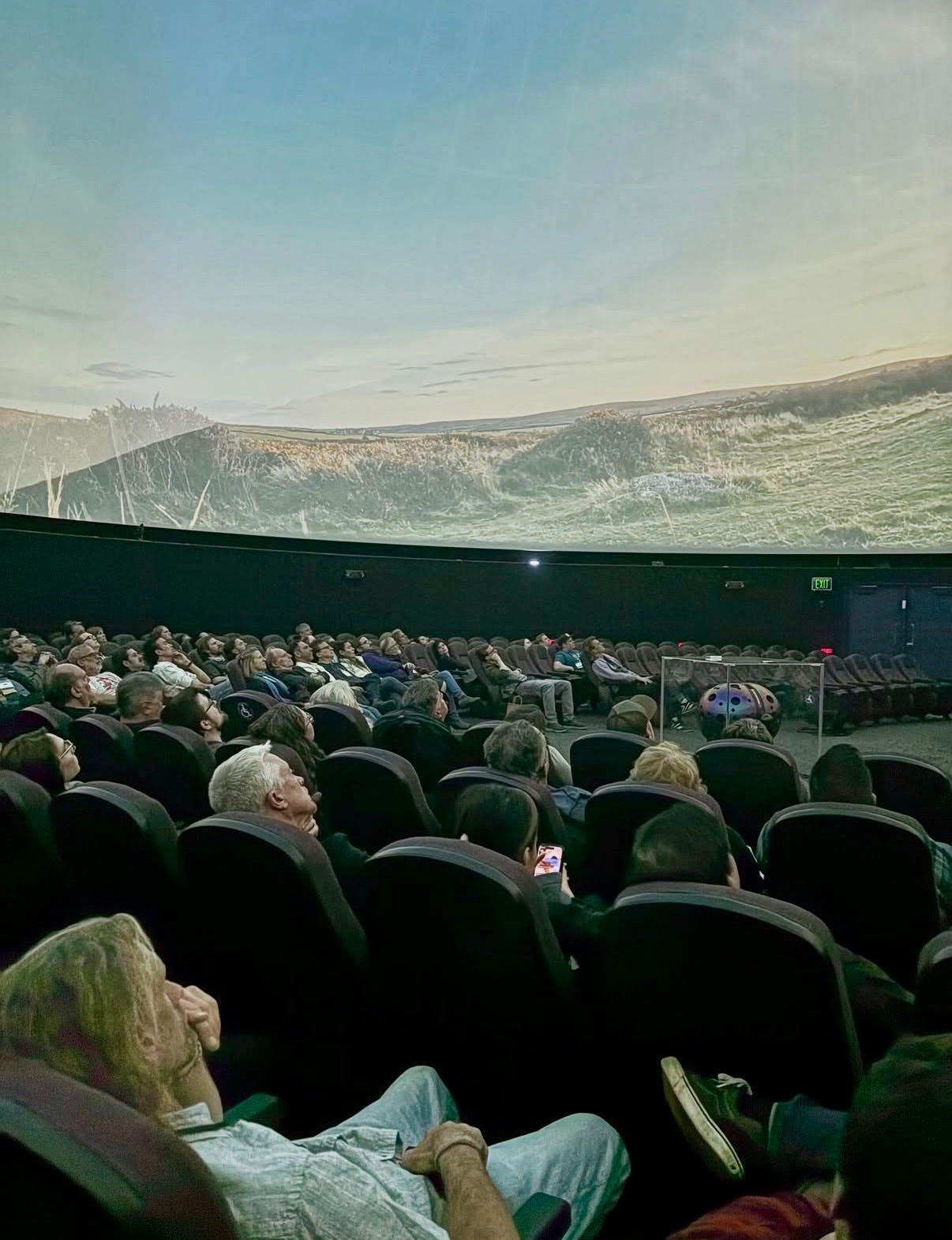
What surprised me even more was how accessible immersive production actually is now. Yes, there’s technical work involved, and yes, you will eventually disappear into tutorial rabbit holes at three in the morning. That part remains consistent across all media production.
But the barrier to entry is far lower than people assume.
You can shoot immersive footage on cameras like the Insta360 or various GoPro setups. Drone technology is evolving rapidly too, with more 360 capable systems appearing all the time.
Which means audiences can now experience places in a completely different way, floating through environments rather than simply looking at them.
Provided, of course, you shoot at a high enough resolution.
Because nothing destroys cinematic wonder quite like projected pixel soup across a giant dome ceiling.
We’ve also been building environments in Unreal Engine, essentially constructing entire virtual worlds inside game engines before filming them virtually.
That’s a part of the process that really fascinates me because suddenly the line between filmmaking, gaming and interactive storytelling starts dissolving.
You stop thinking in terms of sets and locations.
You start thinking in terms of worlds.
There are definitely practical considerations.
Speed and motion matter massively. Camera movement behaves differently when the audience is essentially inside the image rather than viewing it traditionally. You can absolutely make people feel unwell if you overdo things.
Though interestingly, after watching a lot of other creators’ work, I realised audiences can tolerate far more movement and immersion than I initially expected.
You’re effectively placing viewers inside a giant VR environment above their heads, except communally, which changes the psychology of the experience completely.
But the technical side isn’t what stayed with me after Dome Fest West.
What stayed with me was the openness.
The willingness to share knowledge.
The seminars weren’t just people desperately protecting trade secrets while pretending collaboration matters. There were genuine conversations about business models, accessibility, audience growth and how immersive storytelling might evolve over the next decade.
And naturally I gravitated toward the sound discussions because regardless of format I will always end up obsessing over audio.
Most of the immersive soundtracks I’ve mixed are delivered in surround formats, but every dome venue tends to have its own calibrated system and acoustic quirks. There’s no universal setup. No magical preset that fixes everything.
Learning how to get the best out of a specific dome becomes part of the creative process itself. Sound suddenly behaves architecturally. You’re not just mixing for speakers anymore, you’re mixing for physical space.
And sitting inside the Fisk Planetarium in Colorado watching fulldome projects from around the world genuinely reminded me why I got into this industry in the first place.
There were huge graphical music spectaculars. Space exploration films. Family projects. Experimental work. Comedy. Abstract visual journeys that felt halfway between cinema and lucid dreaming.
All of projects felt creatively ambitious in a way that’s becoming increasingly rare in mainstream production.
Nobody seemed interested in chasing algorithms.
They were chasing experiences.
I left Colorado feeling inspired. Like a kid sitting in a dome cinema again, equal parts amazed and slightly nauseous.
If you’re already experimenting in immersive, fulldome or XR stuff, or even just curious about what’s possible. Check out the work of my production company Five29, and find out how we can help. Visit: www.five29.com
Just curious - how did you come upon the name "five29?"
Getting one of those PSVR systems was a pretty awesome experience for me as a gamer, so I'd absolutely go to see an immersive movie experience. Seems like the ones that are happening at the dome in Vegas are selling out pretty quickly.