Failure and The Accidental Wisdom of Yogi Bear
Why a fictional bear who steals picnic baskets solved resilience better than any £700 business course.

How many times have you talked yourself out of doing something because you might fail at it? Not die, and not lose a limb, but just look a bit stupid in front of people who spend their evenings arguing on Facebook about wheelie bins. That’s the thing I hate about Britain: failure is treated like some contagious Victorian disease. You’re allowed to fail quietly behind closed doors, ideally with the curtains drawn and a cup of tea going cold beside you. But fail publicly? Oh, brilliant. The nation gathers like pigeons around dropped chips.
I mess up on an almost hourly basis professionally, personally, spiritually and technologically. Half my career in sound has basically been me opening sessions and discovering new and inventive ways to break things that worked perfectly yesterday. Yet, somehow, we’ve built this culture where the second someone takes a risk and it goes wrong, people line up to laugh at them like it’s a public hanging sponsored by LinkedIn comments.
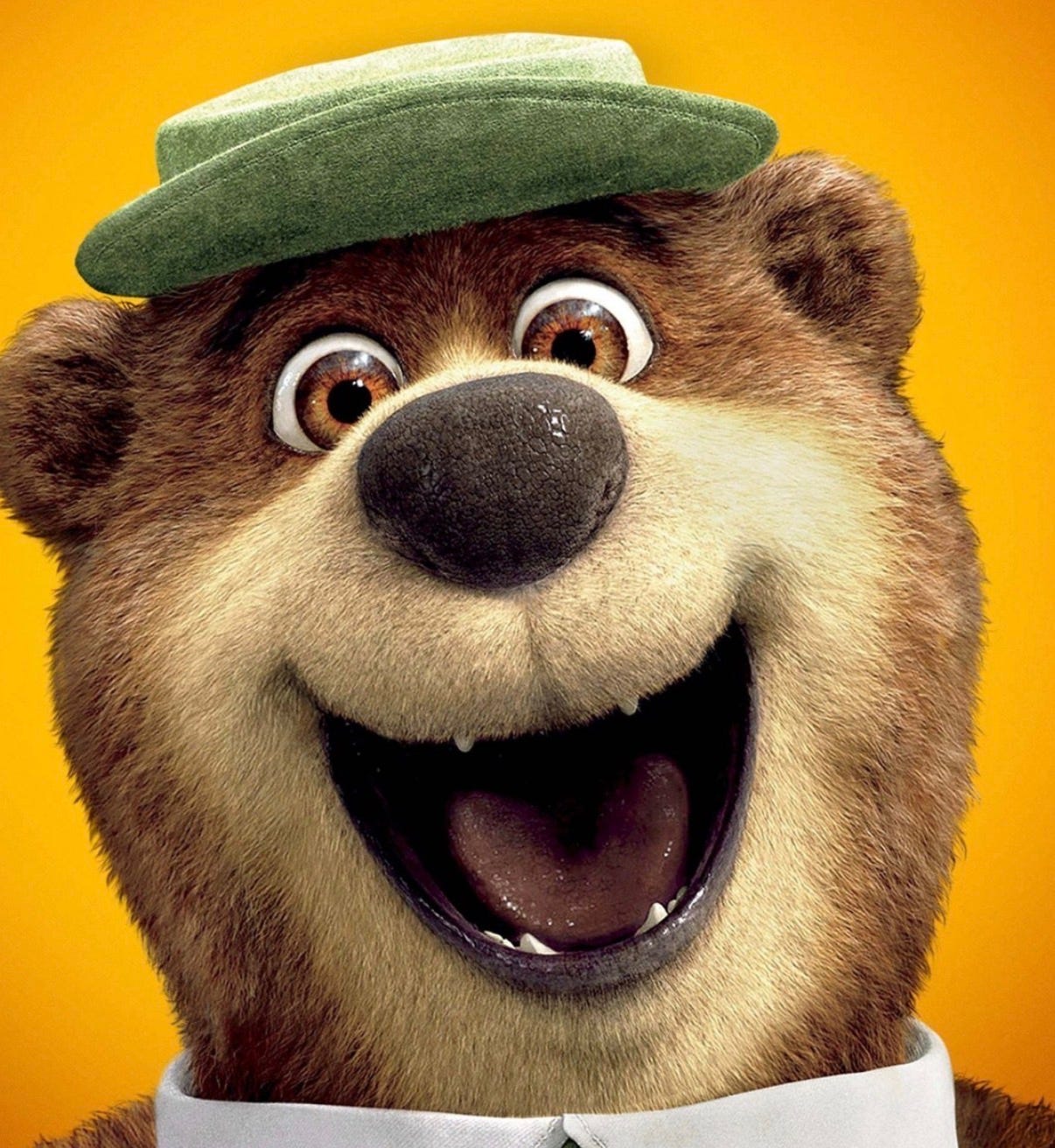
Now, I’m not coming at this like some bloke with a £700 course telling you failure is a “growth mindset opportunity” while standing in front of a rented Lamborghini. Those people should be launched into the sea. But failure is a teacher. An irritating one, admittedly like a PE teacher who smells faintly of damp squash courts and disappointment. Still a teacher, though.
The Wisdom of Yogi Bear
The ridiculous thing is that I was reminded of this while watching 2010’s feature Yogi Bear the other day, which is not a sentence I expected to write at this stage of my life. There I was, sat on the sofa questioning every decision that led me to voluntarily spend ninety minutes watching a CGI bear commit light administrative fraud, when suddenly the film accidentally stumbled into wisdom.
Ranger Smith has basically lost Jellystone Park. Everything’s gone to shit, morale’s in the bin, careers are collapsing, and everyone’s doing that thing humans do where they stare into the middle distance pretending they’re fine. Then Yogi Bear, a creature whose main life skill is organised picnic theft, comes out with the line: “You can’t fail if you don’t quit.” That’s the line, straight from a children’s film about a bear in a hat.
And annoyingly, the stupid cartoon bear articulated failure better than half the business influencers on the internet. Somewhere there’s a bloke on LinkedIn posting “RISE. GRIND. DOMINATE.” over a black and white photo of himself looking at a helicopter, while Yogi Bear quietly solved resilience between joke sounds and animated forestry management. Honestly, there’s something deeply humbling about receiving emotional clarity from a fictional bear who spends most of his life stealing sandwiches.
Learning Through Catastrophe
I taught a class the other day and one student asked me, “But what if I fail?” So I told them, “Well, you try again.”
Failure will teach you more than I can, more than your college can, and more than any teacher can. Real failure burns lessons into your brain permanently, because your nervous system remembers embarrassment with frightening efficiency. I encourage my students to learn through my failures because most of my useful knowledge comes directly from catastrophe.
Books help with this too, which is lucky because they’re cheaper than therapy. Books are basically thousands of years of archived human failure. That’s all history really is: people making awful decisions and someone writing them down afterwards. You get access to millions of mistakes without having to personally ruin your own life first. That’s data.
Adapting to Mistakes
Take my Substack for example. I noticed the technical articles weren’t landing as much as the ones where I was complaining about something ridiculous or exposing some personal failing. It turns out people prefer honesty over another dry tutorial about signal chains. So I adapted, which technically means I failed first.
It was the same with my driving test: I failed it six times. At that point, the examiner starts recognising you like a recurring sitcom character, and by the final attempt, I think we both just wanted closure. I failed my 11 plus as well. I even failed at getting to the dentist on time once and lost access to an NHS dentist, which in modern Britain is basically like losing a winning lottery ticket. You don’t recover from that emotionally, and I’ll never miss an appointment again if I can help it, assuming I ever locate another NHS dentist before civilisation collapses entirely.
Every one of those failures taught me something useful, mostly regarding stress management, scheduling, humility, and how to absorb public embarrassment without dissolving into dust.
The British Attitude to Risk
Meanwhile, Britain still treats failure like a moral weakness. We love dragging people back down the second they stumble. There’s this bitterness baked into the culture where people would rather sneer at someone trying than admit they’re too scared to attempt anything themselves. Not everyone of course.
Google literally throws parties when they kill off failed products. Imagine that here: “Good effort everyone, the thing collapsed horribly but we learned loads.” In Britain, someone would immediately ask how much taxpayer money it cost and then write an angry column about it next to an advert for stairlifts. America has its own problems obviously, mainly involving healthcare bills and motivational podcasts, but they do seem better at letting people start again after disaster. Over here, we practically tattoo your mistakes onto your forehead.
Our lives are supposed to be messy. Your brain, your career, and your identity are all unfinished. You’re meant to get things wrong while you figure it out. I don’t have all the answers, and you don’t either. If you’re reading this, though, at least you’re curious and trying to learn something even if it’s just confirmation that I’m a self righteous idiot who desperately needs an editor.
If that’s what you think, then fair enough. I’ve probably failed you. And honestly, good. That means I’m still trying things.
I also failed at thinking of a smooth segue into a call to action, so look: if you want more rambling about sound, storytelling, creativity, and professional humiliation, check out more on my substack